Setting the Standard: For Cleaner Coasts

On 4th July 2025, A Future Without Rubbish (AFWR) launched a new initiative on Lowestoft beach. We’re calling it Setting the Standard.
Led by Luke Douglas-Home, The Coastline Runner, this campaign seeks to streamline and coordinate the vital efforts of beach cleaners. The idea is simple: bring together a coastline community’s schools, council, businesses, and community (the ‘SCBC’ approach), and agree on what a clean coastline should look like, before visitors come to enjoy. Then, using AFWR’s innovative reporting models, communities can better understand coastal pollution and how to reduce it. Track it. Report it. Improve it. And then crucially, hold polluters more accountable.
We’re developing this campaign with the ‘Suffolk Chapter’, which involves a series of community-oriented events and plog-runs along the East Suffolk coast throughout July.
Launching in Lowestoft
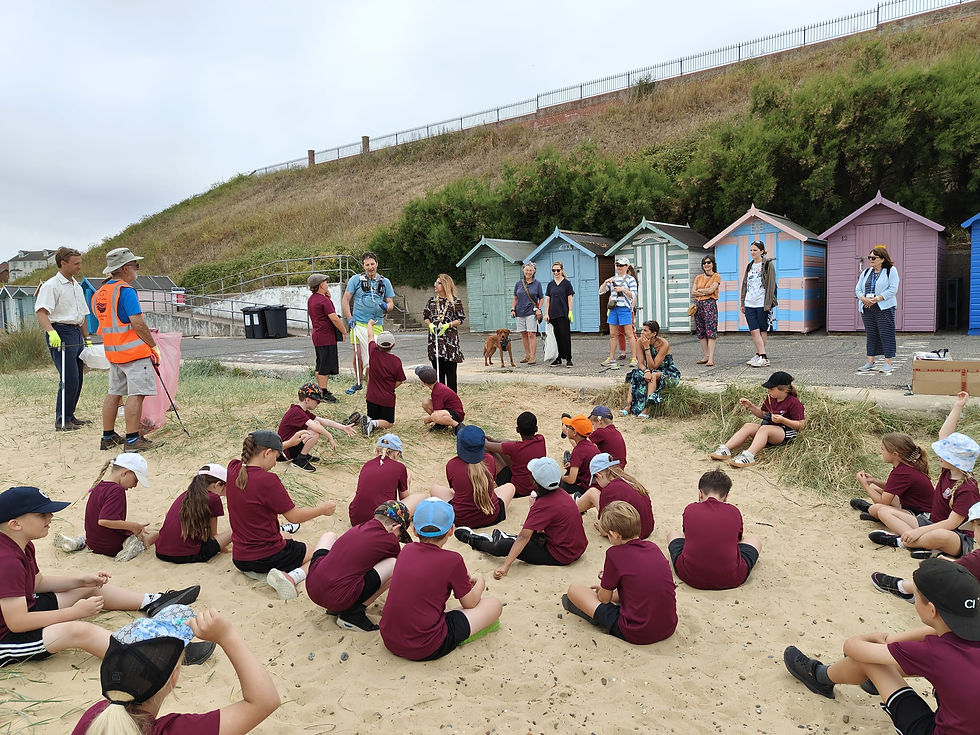
The 4th July event kicked off at St. Mary’s RC Primary School, where Luke welcomed Mayor Nasima Begum and Cllr Paul Page. In keeping with the Coastline Runner's mission, he spoke to pupils about the reality of coastal plastic pollution, the ambition behind the initiative, and, in response to enthusiastic questions, explained why he runs in ‘Vibram Aqua’ barefoot running shoes (which, yes, he’s worn for hundreds of kilometres of coastal running).
Mayor Begum echoed Luke’s message, reinforcing the responsibility of local people to care for their environment:
“...while we enjoy the beauty of our beach, we also have a responsibility to protect it. Every crisp packet picked up, every bottle recycled,- it all matters. Because when we leave nothing but footprints, we leave behind a legacy of care.”
From the school hall to the seafront, we were joined by pupils, teachers, local councillors, the Mayor, the UK Environmental Law Association (UKELA), and the community group Suffolk Beach Cleans. Together, we set off for the beach clean, which was to be short, purposeful and focused.
In just 30 minutes, our volunteers collected and logged 181 individual waste items. Here’s the breakdown:
Plastic: 96 (53%)
Cigarette butts: 49 (27%)
Metal: 13 (7%)
Paper and cardboard: 8
Wood: 3
Glass: 3
Ghost gear (fishing net remnants): 2
Others: 7
The findings were telling, both in terms of quantity and the types of waste collected. We had been informed that the beach had been cleaned previously, so the sheer amount of waste was remarkable. A significant portion of this waste consisted of plastics, both large (such as crisp packets and bottles) and small (like sweet wrappers and torn fragments). Cigarette butts were found in large numbers, alongside other unexpected items like a golf ball, a tennis ball, and a few children's toys. Some ghost gear like the remnants of fishing nets was found. This is considered the deadliest form of marine plastic in our oceans. The range of items collected, particularly the mix of small plastics, cigarette butts, and unusual litter, highlighted the need for more structured and consistent tracking. This is exactly the kind of data our new model is being designed to gather and use to strengthen future clean-up efforts and accountability measures.
Amelia, from Suffolk Beach Cleans, reflected on the importance of the day:
“At Suffolk Beach Cleans, we were excited to be part of the Future Without Rubbish beach clean. For us, it wasn’t just about removing litter — it was about helping to set a new standard for what our coastlines should look like: clean, cared for, and completely free of rubbish. Events like this show the power of community action and our shared commitment to a cleaner, more sustainable future.”
Why Measuring Beach Clean Impact Matters

This event marked the pilot of a community-led model that introduces a way to track, record, and evaluate the results of beach cleans. The goal? To ensure clean-up efforts are consistent, replicable, and ultimately more effective in holding polluters accountable and influencing systemic change.
Our lightweight, scalable reporting system, co-designed with input from local schools and councils, will help standardise how coastal clean-ups measure success. We’re already learning from the data and responses, and plan to use this insight in future events as we develop and improve it further!
The Suffolk Chapter Continues
Following the launch event, Luke did what he does best and ran from Lowestoft to Southwold, collecting more shoreline litter along the way and highlighting the significance of the plastic pollution problem along the East Suffolk Coast. The following weekend, he ran from Southwold to Aldeburgh, once again collecting plastic, this time amidst a particularly punishing heatwave. As part of this second leg of ‘The Suffolk Chapter’, Luke participated in a beach clean in Southwold organised by Adnams Brewery volunteers and the Marine Conservation Society. It’s inspiring to meet with other dedicated volunteers who share our desire to challenge systemic inaction on plastic pollution.
Each run was made possible with the support of Vibram FiveFingers (footwear) and Teemill (our circular clothing partner) and Waterhaul sunglasses, when the Suffolk heat got intense!
The final segment of this chapter will be held this coming week, when Luke will plog-run between Aldeburgh and Felixstowe, marking his completion of the entire Suffolk coastline. Then, on Monday 21st July, Luke will return to Lowestoft to reflect on the Setting the Standard launch event with Lowestoft Town Council and address the issue of historic landfill sites in the area.
We will be developing a full impact report on The Suffolk Chapter, which will include our data, analysis, and recommendations for how this approach can be replicated in other coastal spots.
Support the Next Chapter
Setting the Standard is designed to be the beginning of something bigger than a series of plog-runs and beach cleans. It aims to:
Involve all local stakeholders
Define what a "clean beach" really means
Develop light-touch reporting methods (in partnership with schools and councils)
Track what works — and what needs to change
Pressure polluters to take responsibility
Our next steps depend on the community and your support. The more funds we raise, the more towns we can work with, and the more we can scale up this practical, transparent, people-powered approach to tackling plastic pollution.
🙏 Help us grow the initiative by donating to our campaign: https://www.avivacommunityfund.co.uk/p/setting-the-standard
Let’s do more than just cleaning our beaches, let’s change the system that’s polluting them.
We’d love to hear your thoughts on this new approach. Leave a comment below to let us know what you think, and how you think we can improve future events.


rr88m1.com mình vừa ghé qua để xem giao diện thôi. Ấn tượng đầu tiên là trang này trình bày theo từng khối khá gọn, kiểu thông tin nào ra thông tin đó nên mắt lướt một vòng là bắt được mạch, không phải kéo lên kéo xuống đoán xem mình đang ở đâu, và mấy phần nói về nguồn gốc pháp lý họ đặt khá lộ, để ngay trên trang nên ai muốn kiểm tra thì chỉ việc nhìn là thấy. Mình cũng để ý thao tác chuyển mục, cuộn trang rồi quay lại vẫn mượt, menu nằm chỗ dễ nhìn nên không bị “mất dấu” giữa chừng, cảm giác làm site này có nghĩ tới người hay đổi ý…
Mình thỉnh thoảng cũng xem mấy bài soi cầu cho vui thôi, coi như một cách tự tập nhìn dàn số và đối chiếu lại cảm giác của mình. Hồi trước hay nghe người quen mách nước rồi ghi bừa, trượt thì lại khó chịu, nên giờ mình ưu tiên đọc kiểu có lập luận để hiểu họ nghĩ gì, đúng sai gì cũng rút được chút kinh nghiệm. Có dạo lướt thấy https://soicauxsmb.pro/ nhắc đến chuyện chọn lọc theo chu kỳ, mình thử áp dụng theo hướng “loại bớt” chứ không đặt niềm tin tuyệt đối, thấy đầu óc bớt bị cảm xúc kéo đi. Với mình mấy thứ này chỉ nên xem như tham khảo, quan trọng là…